Tuesday, August 24, 2010
Cold Cereals NOT healthy
One of the most surprising things I read in Michael Barbee's book "Politically Incorrect Nutrition" was that whole grain cold cereals are not good for us. It will be a huge adjustment and totally opposite of what I previously believed. Read more here on page 117.

Saturday, July 24, 2010
FED UP!
 We watched this documentary. It was pretty good, not quite as modern-techy sophisticated as other movies, and was about Genetically Modified Organisms. They even interviewed one lady that seemed to point out many positive points about GMO, although it seems the evidence weighs against it. Available through WSU libraries.
BPA in milk jugs
So, after making my raw milk google map, I got to thinking about milk containers, and whether they have BPA, and was wondering if after all those phone calls I made if I'd have to make a ton more to ask if they sold in "glass." Well, I googled it, and BPA is a real mess. No one knows what they're talking about when it comes to avoiding BPA. They all contradict each other. I guess I better go to the real sources, like ask Alex (my friend here in Pullman!) or Patricia Hunt, of Washington State University. My husband comes home and says, "Well, after all that hype about BPA, don't you think your milk is BPA-free?" I don't think so. The only things I've seen changed are 1. water bottles 2. baby bottles and 3. home storage containers that all say "BPA free" on them.
Some people in online conversations claimed milk gallons have BPA, others didn't, but those that said they do advised keeping them cool and not re-using them. Then, I thought, what does that mean for recycled milk containers? Does that for sure put BPA (if there is any) in our food?

What really grossed me out is that the cardboard milk cartons are lined with BPA. AAaahh! So, after trying moderately to avoid BPA I get poisoned by WIC and I've totally been eating BPA because they require that you buy milk in "half gallon" and "quart" quantities at times. Thanks a lot, WIC! I went to the fridge, sure enough had a carton, and dumped it down the toilet.
I was doubtful i f there was any concern about BPA, and then while watching Homo Toxicus one man stated the biggest danger he sees in our environment is BPA, and that scientific research has shown that harmful affects have been found to occur at 23 parts per trillion.
Other interesting things she points out are flame retardants all over our computers, electronics, couches, furniture, mattresses, etc., and our children are exposed to them all the time. She also visited communities that were highly exposed to toxins, like the Inuit of Canada, and others around industrial plants. She went to the lakes and streams and found deformed frogs unable to reproduce because of all the chemical estrogen-like mimicry polluting the water. Additionally, she found sterility among male agricultural workers that are exposed to dangerous pesticides and herbicides, and there is even a GMO corn that was approved to be used as cattle feed only and banned from human consumption because it causes male infertility in humans, but it actually got into our food supply, which they say was inevitable.
Some people in online conversations claimed milk gallons have BPA, others didn't, but those that said they do advised keeping them cool and not re-using them. Then, I thought, what does that mean for recycled milk containers? Does that for sure put BPA (if there is any) in our food?
What really grossed me out is that the cardboard milk cartons are lined with BPA. AAaahh! So, after trying moderately to avoid BPA I get poisoned by WIC and I've totally been eating BPA because they require that you buy milk in "half gallon" and "quart" quantities at times. Thanks a lot, WIC! I went to the fridge, sure enough had a carton, and dumped it down the toilet.
I was doubtful i
f there was any concern about BPA, and then while watching Homo Toxicus one man stated the biggest danger he sees in our environment is BPA, and that scientific research has shown that harmful affects have been found to occur at 23 parts per trillion.Other interesting things she points out are flame retardants all over our computers, electronics, couches, furniture, mattresses, etc., and our children are exposed to them all the time. She also visited communities that were highly exposed to toxins, like the Inuit of Canada, and others around industrial plants. She went to the lakes and streams and found deformed frogs unable to reproduce because of all the chemical estrogen-like mimicry polluting the water. Additionally, she found sterility among male agricultural workers that are exposed to dangerous pesticides and herbicides, and there is even a GMO corn that was approved to be used as cattle feed only and banned from human consumption because it causes male infertility in humans, but it actually got into our food supply, which they say was inevitable.
No Impact Man
 We just watched this video this week (available at Neill Public Library), and our whole family even my daughter really liked it. "No Impact Man" is a documentary of a New Yorker that tries to not impact the environment at all, phasing out garbage, electricity, etc., over the course of a year. He has his whole threesome of a family in on "the project". Its kind of like a reality show, showing their intimate lives, and it also shows the criticism he gets and how it really is on a family level. They actually liked going green a little bit, and there's some things they'll never go back on. In the end it talks about how he thinks the movement to help the environment is going. This was a feel good movie, and was entertaining.
Friday, July 9, 2010
Consumer Loyalty
WatchMcD's: The Rap He just melts my heartstrings when he hits on trans fat and aspartame, and I get a kick out of what he says to Ronald at the end.
So, as we were watching Super Size Me, we saw the scene of the French magazine article stating the detriments of McD's, and advising people to cut back, and McDonald's totally lashed out and said that column was uncalled for, and it dawned on me amidst all the stuff in the movie that McDonalds should probably be put out of business. Sure, they try to cater healthy and have apples for dipping in happy meals and a larger selection of salads, but we really shouldn't ("shouldn't?") have McD's. (I wasn't particularly anti-fast food except for the price until I learned about MSG this March, and now I wouldn't touch it. Learning about the McFrankennugget tips the scales, too, along with modern cow raising techniques.) Can you imagine though, after they dot the entire world to the nth degree, what it would do if all the McDonald's went empty? What a waste that would be? What an economic adjustment that would be? It would be so good though.
But, that's not what I was first thinking. At first, I turned to my husband, and I can't remember what I said but it was something like it would be so sad to boycott McDonald's, or if they went out of business. "We don't even eat there!" He reminded me. "Right!" I thought. We don't even support them in the first place. But with these corporate heads, do you kind of feel guilty wanting them to go away? The friendly Ronald McDonald? Would you feel guilty wanting McD's to disappear if you saw Ronald McDonald at the local parade driving down the street and waving at you with a friendly-shy smile?
Another story: Christmas season and my husband comes home and tells me he was at ShopKo and there was a Santa Clause there and no one in line for him. He was workless. I felt such a twinge of sadness. I was like "Oh, no, that is so sad," and I got a little emotional. I don't even like the Santa thing; I think it makes kids greedy and parents shopoholics, and there I am getting all emotional over a fictional character, and that's just the thing. A corporation has such an identity, its like a person. So, what I'm asking here, is anyone else like me a whimp when it comes to letting go of these corporate Icons? Do we have too much corporate loyalty? Is it too ingrained in us to trust the Big Business? Would we be sad if the corner grocery went out of business? What if all of Sam's club went out of business? Which would bring more grief?
 Then, there's another thing. We're in ShopKo again the other day, and my daughter wants to sit and watch the video playing, and its Toy Story. Now, what kind of story line is it that we have to "feel sorry" for giving our toys to charity, and that they have feelings? I mean, its great to build emotions and empathy, but we all know the story, and its geared towards making bonds with these inatimate toys and clinging to them and bonding to them. I think bonding's great, but what is it teaching that we have to bond to the products people are selling us in the store? Are we that out of touch with human relationships? Its a twisted kind of good message that we all love, but does it make you feel that much more guilty for not treating all our "stuff" developed by Matel and Disney with such sentiment we'd cherish it like life itself instead of making real friends with real people like the neighbor across the street?
So, as we were watching Super Size Me, we saw the scene of the French magazine article stating the detriments of McD's, and advising people to cut back, and McDonald's totally lashed out and said that column was uncalled for, and it dawned on me amidst all the stuff in the movie that McDonalds should probably be put out of business. Sure, they try to cater healthy and have apples for dipping in happy meals and a larger selection of salads, but we really shouldn't ("shouldn't?") have McD's. (I wasn't particularly anti-fast food except for the price until I learned about MSG this March, and now I wouldn't touch it. Learning about the McFrankennugget tips the scales, too, along with modern cow raising techniques.) Can you imagine though, after they dot the entire world to the nth degree, what it would do if all the McDonald's went empty? What a waste that would be? What an economic adjustment that would be? It would be so good though.
But, that's not what I was first thinking. At first, I turned to my husband, and I can't remember what I said but it was something like it would be so sad to boycott McDonald's, or if they went out of business. "We don't even eat there!" He reminded me. "Right!" I thought. We don't even support them in the first place. But with these corporate heads, do you kind of feel guilty wanting them to go away? The friendly Ronald McDonald? Would you feel guilty wanting McD's to disappear if you saw Ronald McDonald at the local parade driving down the street and waving at you with a friendly-shy smile?
Another story: Christmas season and my husband comes home and tells me he was at ShopKo and there was a Santa Clause there and no one in line for him. He was workless. I felt such a twinge of sadness. I was like "Oh, no, that is so sad," and I got a little emotional. I don't even like the Santa thing; I think it makes kids greedy and parents shopoholics, and there I am getting all emotional over a fictional character, and that's just the thing. A corporation has such an identity, its like a person. So, what I'm asking here, is anyone else like me a whimp when it comes to letting go of these corporate Icons? Do we have too much corporate loyalty? Is it too ingrained in us to trust the Big Business? Would we be sad if the corner grocery went out of business? What if all of Sam's club went out of business? Which would bring more grief?
 Then, there's another thing. We're in ShopKo again the other day, and my daughter wants to sit and watch the video playing, and its Toy Story. Now, what kind of story line is it that we have to "feel sorry" for giving our toys to charity, and that they have feelings? I mean, its great to build emotions and empathy, but we all know the story, and its geared towards making bonds with these inatimate toys and clinging to them and bonding to them. I think bonding's great, but what is it teaching that we have to bond to the products people are selling us in the store? Are we that out of touch with human relationships? Its a twisted kind of good message that we all love, but does it make you feel that much more guilty for not treating all our "stuff" developed by Matel and Disney with such sentiment we'd cherish it like life itself instead of making real friends with real people like the neighbor across the street?
Green Cleaners
See WomenAndEnvironment.org
Toxic Chemicals Lobby: Exclusive Leaked Footage
Moms Take Action Against Toxic Chemicals
Headzup: Rocket Fuel In Baby Formula
In case you're wondering about this one, there's lots of stuff in our water. The birth control "pill" taken by many women is not fully absorbed by the body, goes into the sewer, and somehow (don't ask me) ends up in our water supply, as does many other pharmaceutical drugs people are taking. Rocket fuel distills from the air onto plants, etc., and gets into our water supply. A popular study I heard of in Natural Cures says rocket fuel was found in 100% of women's breast milk.
Toxic Chemicals Lobby: Exclusive Leaked Footage
Moms Take Action Against Toxic Chemicals
Headzup: Rocket Fuel In Baby Formula
In case you're wondering about this one, there's lots of stuff in our water. The birth control "pill" taken by many women is not fully absorbed by the body, goes into the sewer, and somehow (don't ask me) ends up in our water supply, as does many other pharmaceutical drugs people are taking. Rocket fuel distills from the air onto plants, etc., and gets into our water supply. A popular study I heard of in Natural Cures says rocket fuel was found in 100% of women's breast milk.
Thursday, July 8, 2010
Write Your Government
To contact the Federal Trade Commission (FTC):
Federal Trade Commission
600 Pennsylvania Avenue, N.W.
Washington, D.C. 20580
(202) 326-2618
Fax: (202) 326-2034
To contact the Food and Drug Administration (FDA):
U.S. Food and Drug Administration
5600 Fishers Lane
Rockville MD 20857-0001
(888) 463-6332
Fax: (301) 443-6591
To contact your congressman or senator:
Look in local phone book or visit www.congress.org or www.contactingthecongress.org
To contact the President of the United States:
The White House
1600 Pennsylvania Avenue NW
Washington, DC 20500
Comments: (202) 456-1111
Switchboard: (202) 456-1414
E-mail: president@whitehouse.gov
www.whitehouse.gov
Tell 'em what you think. It'd be a good idea to contact food producers, too; questionable ones you're skeptical of, and then good farming practices you support. Its always good to figure out what's in your food.
Federal Trade Commission
600 Pennsylvania Avenue, N.W.
Washington, D.C. 20580
(202) 326-2618
Fax: (202) 326-2034
To contact the Food and Drug Administration (FDA):
U.S. Food and Drug Administration
5600 Fishers Lane
Rockville MD 20857-0001
(888) 463-6332
Fax: (301) 443-6591
To contact your congressman or senator:
Look in local phone book or visit www.congress.org or www.contactingthecongress.org
To contact the President of the United States:
The White House
1600 Pennsylvania Avenue NW
Washington, DC 20500
Comments: (202) 456-1111
Switchboard: (202) 456-1414
E-mail: president@whitehouse.gov
www.whitehouse.gov
Tell 'em what you think. It'd be a good idea to contact food producers, too; questionable ones you're skeptical of, and then good farming practices you support. Its always good to figure out what's in your food.
Brain Food
My husband has this thing with "brain foods". He'd post a list of what they are on the fridge, and say he needed them. The lists consisted of things such as salmon, spinach, blueberries, flax (we both didn't know what flax was). So, I'd buy a few. Then, on test days, he would tell me that I had disappointed him by not having served him a dinner of something from that list. I wasn't quite catching on, and I didn't realize that's what I was supposed to do. Can you really build your brain up overnight, or stimulate it with food for the hours your supposed to take an exam? Weirdo.
Anyway, here's another generic list of brain foods, which I requested from my husband, which he rightly points out would be enhanced if they listed why they actually are brain foods and how they benefit.
List of 50 brain foods
Brain Food Success blog
IncreaseBrainPower.com
Anyway, here's another generic list of brain foods, which I requested from my husband, which he rightly points out would be enhanced if they listed why they actually are brain foods and how they benefit.
List of 50 brain foods
Brain Food Success blog
IncreaseBrainPower.com
Hydrogen Peroxide and Dimethyl Sulfoxide (DMSO)
My husband and I learned from "The Beautiful Truth" how one doctor/researcher theorized that we don't actually get colds from our nose but through our ears, and that by placing hydrogen peroxide in the ears and letting it sit for five or so minutes can prevent a coming cold from breaking. My husband read on the net to have it at room temperature, because the cold hydrogen peroxide in the ears can cause dizziness.
Kevin Trudeau states in his book Natural Cures that using hydrogen peroxide and dimethyl sulfoxide intraveneously is one cure for cancer, stiffled because it doesn't bring in the big bucks like chemo. (Evenidently, he claims, chemotherapy is mustard gas, or a version of it, similar to that used in the Second World War to gas prisoners.)
Kevin Trudeau states in his book Natural Cures that using hydrogen peroxide and dimethyl sulfoxide intraveneously is one cure for cancer, stiffled because it doesn't bring in the big bucks like chemo. (Evenidently, he claims, chemotherapy is mustard gas, or a version of it, similar to that used in the Second World War to gas prisoners.)
Tuesday, July 6, 2010
GDP vs. GPI
 "I've researched and written in depth about the large percentage of our economy that's conveniently ignored- waste, pollution, fraud, negligence, planned obsolescence, and other profitable spin-offs. While the Gross Domestic Product continues to climb, the Genuine Progress Indicator ( a more accurate tracking system that subtracts the "bads" from the total) continues to fall. Our official national yardstick doesn't allow us to subtract the oil spills, car accidents, energy waste, and lawsuits from the GDP, to come up with a more sensible assessment on how we are really doing. In terms of GDP, the economic hero is a terminal cancer patient going through a messy divorce, whose sports car is totaled in an accident that was his fault. The data from his misfortunes make the GDP go up. But the reasonably happy guy with a solid marriage who cooks at home, walks to work and doesn't smoke or gamble is an economic nobody, in the eyes of economists." -David Wann in Simple Prosperity
The movie "The Corporation" repeats this point, saying "economists need to learn to subtract."
Saturday, July 3, 2010
Lead
 The following can be found in Healthy Child, Whole Child by Ditchek and Greenfield, both M.D.s.
Children are exposed to lead mostly through dust, dirt, and water. Lead poisoning results in lowered IQ, learning disabilities, hyperactivity, aggressiveness, and criminal behavior. Early exposure to lead shrinks areas of the brain associated with attention, decision making, and emotional control. "The optimal level for lead in the blood is zero. Federal safe blood-lead levels are set at 10 mcg/dL, though it's known that damage occurs at even lower levels. Reducing our children's exposure to lead will be an expensive undertaking that may require government subsidy, but must be done."
Ways to reduce lead exposure:
1. Buy a testing kit with wipes that turn color in the presence of lead, especially if you live in an older home. Move out during any remodels. Wipe down walls regularly and take off shoes to reduce amount of dust tracked in.
2. Have your child's blood-levels checked at 10-12 mos. and at 2 years.
3. Make sure your children eat foods rich in calcium and iron. Pregnant women need adequate calcium so lead is not drawn from their bones into the blood supply.
4. Test household water for lead using an inexpensive screening kit. Replace pipes if they are accessible and appear to be a problem, or get a filter.
5. Dispose of thermometers, batteries, compact fluorescent light bulbs, etc., as hazardous waste.
6. Request lead checks of schools, day care facilities, community centers, wherever children spend time.
7. Avoid fish and get omega-3 fatty acids through a purified fish oil supplement instead. Check state-by-state freshwater warnings at www.epa.gov.
8. Do not give your children patent remedies from China, India, Mexico, or the Caribbean, which are responsible for up to 30 percent of all cases of childhood lead poisoning.
9. Some candle wicks contain lead as a stiffener, which put enough lead into the air to exceed children's safe daily lead intake. Look for candles guaranteed to be lead free, and be careful in tightly closed rooms.
Clean Up Your Diet
 This book by Max Tomlinson is full of beautiful pictures of fruits and vegetables, discusses how to avoid contaminants in our bodies, and offers four detox diets, all in either a weekend, one-week, or four week plan. For each diet there's a menu plan and recipes, so its all ready to try. I'm pretty excited. Just need to replace the blender we broke this month.
It also offers ailment plans. I found mine: Hay Fever. I don't know how strictly I'll have to stick to this diet, it sounds pretty rough. It says 1. avoid typical allergens, such as wheat and dairy, 2. eat more organic fruits and veggies high in antioxidants, vitamins A, C, and E, and the mineral zinc, 3. avoid inflamatory foods such as red meat and eggs which contain arachidonic acid, and perhaps also tomatoes, egglplant, bell pepper, chili, white potato and tobacco (all also inflammatory), and 4. eat local honey so I get used to local pollen.
National Vaccine Information Center
 This website seems to be a good source on vaccine info. I'll have to check it out.
Here's info. on California's whooping cough outbreak.
Friday, July 2, 2010
Avista renewable power
"When you sign up for Buck-A-Block, you make a voluntary payment above and beyond your normal rates. Avista makes no profit from that additional money, which goes to support the renewable energy many of our customers prefer by purchasing environmental offset from renewable energy generation.
"We also offer a renewable generation incentive (RGI) for Washington customers who install their own renewable energy systems, like solar panels, wind turbines or anaerobic digesters. To qualify, your system must be on the grid."
We tried this, and it is so easy. Wind energy is getting very close in price to the cheapest alternative. If its normally $26 dollars for a block of energy, the going rate is $1 more for the energy to be completely from wind energy. You can even buy extra blocks for your neighbors to make more energy use renewable.
Avista also offers many more incentives to be more energy efficient, and will recycle or reimburse old appliances.
"We also offer a renewable generation incentive (RGI) for Washington customers who install their own renewable energy systems, like solar panels, wind turbines or anaerobic digesters. To qualify, your system must be on the grid."
We tried this, and it is so easy. Wind energy is getting very close in price to the cheapest alternative. If its normally $26 dollars for a block of energy, the going rate is $1 more for the energy to be completely from wind energy. You can even buy extra blocks for your neighbors to make more energy use renewable.
Avista also offers many more incentives to be more energy efficient, and will recycle or reimburse old appliances.
Going Green
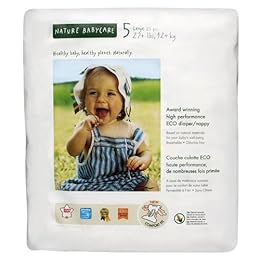 My husband came home with these Naturecare diapers about a month ago. (Have you noticed he's doing my shopping? Isn't that so nice? Please don't turn green of envy.)
I was surprised when he brought them home. I asked him if he knew how much faster these biodegraded than Huggies, and wondered how much they cost. I think they were about 4 times as much. The link above is even cheaper, at 46 cents per diaper, whereas Huggies are about 22 cents per diaper.
My husband said he heard me talking about how we should go green on diapers. I said I wasn't serious, just thinking about it. I think it was a leap, though, into the darkness. We can go green! It is possible. This was a big step in letting go of old ways.
I do still want to know how quickly they biodegrade. They say "compostable," whatever that means. There's also hybrid diapers that are cloth with disposable inserts that biodegrade, and I think that's more what I was shooting for. Cloth would be great, too, even though they have downsides: stinky, require energy for washing, and water.
Milk and the Corporation
I was feeling a little radical proposing raw milk consumption, but yesterday my husband happened to have a lunch conversation about raw milk with a friend of ours. Apparently, someone in the Econ dept. is studying the topic and states that corporations have lobbied congress and now made it illegal to sell raw milk in some states, even though the health benefits are superior. Nutritionists state that supermarket milk just isn't what we need. It just makes it more convenient to get from producer to consumer, but makes it much more dangerous and not as healthy.
Thursday, July 1, 2010
Tuesday, June 29, 2010
Campaign to change nutrition labels

I'm glad that the nutrition label has had some changes. When I was little, it was hardly readable. Its nice they made the print larger, and that trans fats are added to the picture. However, I would change a few very important things.
First off, I now believe the most important thing on the label is not the nutrition facts chart at all but the ingredients listing! I think the main thing to ask before eating is: is this real food?
Second, calories is right at the top of the chart, but focusing too much on calories loses sight of the fact that the chemicals put into diet sodas and low-fat foods often makes us more prone to weight gain than the actual fat and sugar it replaces.
Then on the actual chart, I think the Total Fat section should be expanded to include:
Omega 6 fatty acids
Omega 3 fatty acids and its component DHA (these are essential for brain function, and we have no clue how much we're getting- do they want to raise U.S. test scores, or what?) The ratio of omega 3s to omega 6s in our diet is very important. At the turn of the century, they were eating more correctly, at about a 1:2 ratio. That ratio today is about 1:46. Omega 3s can be found in coldwater fish, primarily, fish capsules (keep refrigerated), walnuts, flax, also in grass-fed red meats and cage-free vegetarian-fed hen eggs. If it were labeled, we'd all see where it is! It'd be nice if all meats were labeled, period, with nutrition facts, but expanded to include omega-3 measurements.
Trans fats should be in milligrams instead of grams so there's no more deceptive labeling and
conjugated linoleic acid could be on there, too.
And, very importantly, the amount of post-production free glutamic acid present (see MSG) should be labeled, in grams, to the third decimal place. See more on this issue at Natural Health Care Products. There are lots of health risks from MSG consumption, and we have no idea how much we're eating.
Maybe post-production lead and arsenic should be labeled, too. Of course, that probably varies in production from month to month.
GMO definitely should be on the label, as well as irradiation. I think that's a consumer's right, yet the producers have vehemently decided for us that its not necessary, to prevent consumers being scared off from their product. Seriously! Its all about the money! Besides, how many people read labels anyway? Chill! People will still eat it anyway, label or no label, sadly.
What really should be jumping out at us to buy at the grocery store (fruits and vegetables!) don't even generally have a nutrition label. I wonder if we'd be amazed at the nutrition found in them (or lack thereof by growing and shipping practices), and want to buy them all up. The way our labels are set up, it destroys all the benefits of fruits and veggies; for example, I have a plastic baggie sitting on the counter stating calories, serving size, carbohydrates, fat, protein, and sodium, of common fruits and vegetables. Looking at it, it just doesn't make sense. No wonder there's so much confusion about nutrition. If we're comparing only those four components it almost makes celery equal to a salty soup. Should I avoid avocados, pears, and bananas because they're highest in calories, and start eating lots of cabbage, iceburg lettuce, cucumbers, and cauliflower? Ridiculous. I realize our food labels make no sense.
Currently on the label are macronutrients which include protein, fats, carbohydrates, (and water), and then micronutrients, which are vitamins, minerals, (and good bacteria). Sometimes I look at labels, and wonder how I'm even getting any vitamins and minerals (except in the case of fortified foods). Isn't it crazy how the nutrients are almost always 0% or 2%? If you're real lucky it may have 4% or 6% daily value. (My applesauce had 100% vitamin C, which I was surprised of. Then, I switched brands and realized it was all just the ascorbic acid added; my applesauce now has just 4% DV vitamin C and 8% iron.) I also wonder if there is ever a >1% DV in a food, is it always on the label? (You know... how its common to skip most and just put Vitamins C, A, Iron, and calcium?)
Beyond this, though, (note: its just a fantasy) but there's even more to put on the nutrition label. Heard of phytonutrients? Bioflavinoids? Antioxidants? Enzymes? Coenzymes? Cofactors? Amino acids? There are even some healthy properties of our food that science doesn't even know what they are yet, just knows they're there.
WIC
WIC is a national food program designed to benefit infants, children, and pregnant or nursing women by giving them checks for specific food items at registered stores. Its not meant to provide all the food that low-income children or expecting women need, but to supplement meager incomes with healthy foods in hopes of improving overall nutrition.
I first noticed WIC food choices were rather interesting about 3 years ago. The items that first struck me as odd were peanut butter and tuna fish. The foods available to buy on the check are pretty limited, and why peanut butter was selected was odd to me. Most children are advised not to eat peanut products until age two because of the risk of allergies.
Tuna fish is on pregnant women's checks, yet, the amount is right at the limit of a pregnant woman's recommended intake of tuna, assuming she's rationing a can per week and not eating more than one. I was told that peanut butter is a great source of protein. Tuna as well, and its high in omega 3s which are essential especially for developing infants. But, why does WIC warn about high mercury consumption, and then have it as a WIC item?
The other available foods through WIC are (See Federal online listing or Washington State specific brochure):
Select cereals Kix, Special K, Cheerios, Wheat Rice or Corn Chex, Grape-Nuts, Grape-Nut Flakes, Cream of Wheat, Life; I thought it was all great, increasing whole grain consumption. I've lately learned a little about cold cereals, and that due to the level of heat of production, whole grain cereals like Wheaties and Cheerios result in higher insulin spikes than even straight sugar. The high heat also destroys many nutrients, and "creates toxic elements that have caused rapid death in test animals," yet the FDA approves the use of words like cancer and heart-health promoting on the box. (Barbee, 117)
Milk Well, I've learned raw milk from grass-fed cows beats all, including increasing omega 3s, but raw milk isn't allowed. Nor is goats milk, which is fit for those that can't digest cow's milk. Homogenizing milk (all supermarket brands) makes xanthine oxidase (which damages arterial walls) more absorbed in humans. (Read Politically Incorrect Nutrition.) The growth hormone rBST which has been linked to cancer and weakened immune, and is also important to avoid. In Washington state, rBST-free are readily available and labeled.
In the second year of life, children are given whole milk, which fats help in "brain development." At 2 years of age, they are then switched to anything but whole milk. Are we supposed to believe that the brain instantly doesn't need those fats for development anymore, and "dieting" should be higher priority? Low fat, reduced fat, and skim often have milk solids added which increases free glutamic acid.
eggs Organic eggs aren't allowed, which are higher in omega 3s, but I wonder if advertised vegetarian-fed "cage-free" eggs are, which also have higher levels of omega 3 fatty acids and DHA, essential for brain function. If they're not, I'm sure WIC would change if they realized more omega 3s would be available.
fruit juice This is one of the worst. Sure, it gives vitamins, and it comes from fruit, right? Well, its best fresh made at home. Pasteurization of packaged juice destroys a lot of the enzymes and other nutrients. Just sitting on the shelf, it loses nutrients. Its basically just a sugar drink. It also comes in a plastic bottle- BPA threat? or, tin can- aluminum threat?
WIC offers so much juice. Juice is one of the major sources of sugar in children's diets, right next to soda, according to Behavior and Nutrition. Dentists advise not giving these juices in sippy cups for all-day sipping, which leads to tooth decay, as well as hyperactivity, insulin resistance, and further down the road, type II diabetes. Boxed juice also contains lead, but big deal; so does much of our food.
dried beans Sounds good. They give out a cookbook of bean recipes to expand our world of beans. Cheap, great food storage food :), and they say "baby's love beans."
dried beans or peanut butter Who's really going to choose $1 worth of free beans over $3 worth of free peanut butter, even if it is allergenic? Avoid trans fats by buying 100% natural (Adam's) peanut butter.
canned meats Tuna: contains mercury, but excellent for omega 3s.
cheese Great. Gotta love this one. Just trying to switch over to raw milk cheese, rBST free, from grass-fed cows, and annatto coloring isn't great for us, nor are enzymes.
fruit and vegetable choices They just barely started this. Much needed.
whole grain choices choose corn tortillas, bulgur, oatmeal, brown rice, or 100% whole grain bread (all if its the right weight). Many dough conditioners, additives, and preservatives, aren't good for us. Bread is best homemade.
soy beverages, tofu Soy is not a complete protein; also, unfermented soy products can lead to hyperthyroidism
infant formula, cereal, and baby food Infant formula and baby foods often have hidden MSG and/or BPA. Most people I know have an excess of baby foods and cereals from WIC that they never used.
So, overall, is WIC helping or hurting? I'm not anti-government-choosing-for-us what we eat, so its not Twinkies and Ho-hos, especially when we've got an obesity epidemic and we're undergoing universal healthcare. I think WIC is pretty helpful in many ways (whole grains, fruits and veggies). A real problem is just our food system in general, so how can you blame WIC when its got poor food to choose from?
But, money is voting power, and whoever decides what WIC can and cannot buy has a lot of power to choose a lot of votes in our food supply, for good or ill. What really kills me is the bottled fruit juice and the no-raw no-goats now no-organic milk, and, well, you can see what else I wrote above about the other items.
I first noticed WIC food choices were rather interesting about 3 years ago. The items that first struck me as odd were peanut butter and tuna fish. The foods available to buy on the check are pretty limited, and why peanut butter was selected was odd to me. Most children are advised not to eat peanut products until age two because of the risk of allergies.
Tuna fish is on pregnant women's checks, yet, the amount is right at the limit of a pregnant woman's recommended intake of tuna, assuming she's rationing a can per week and not eating more than one. I was told that peanut butter is a great source of protein. Tuna as well, and its high in omega 3s which are essential especially for developing infants. But, why does WIC warn about high mercury consumption, and then have it as a WIC item?
The other available foods through WIC are (See Federal online listing or Washington State specific brochure):
- Select cold cereals
- Milk
- eggs
- fruit juice
- dried beans
- dried beans or peanut butter
- canned meats
- cheese
- fruit and vegetable choices
- whole grain choices
- soy beverages
- infant formula, cereal, and baby food
Select cereals Kix, Special K, Cheerios, Wheat Rice or Corn Chex, Grape-Nuts, Grape-Nut Flakes, Cream of Wheat, Life; I thought it was all great, increasing whole grain consumption. I've lately learned a little about cold cereals, and that due to the level of heat of production, whole grain cereals like Wheaties and Cheerios result in higher insulin spikes than even straight sugar. The high heat also destroys many nutrients, and "creates toxic elements that have caused rapid death in test animals," yet the FDA approves the use of words like cancer and heart-health promoting on the box. (Barbee, 117)
Milk Well, I've learned raw milk from grass-fed cows beats all, including increasing omega 3s, but raw milk isn't allowed. Nor is goats milk, which is fit for those that can't digest cow's milk. Homogenizing milk (all supermarket brands) makes xanthine oxidase (which damages arterial walls) more absorbed in humans. (Read Politically Incorrect Nutrition.) The growth hormone rBST which has been linked to cancer and weakened immune, and is also important to avoid. In Washington state, rBST-free are readily available and labeled.
In the second year of life, children are given whole milk, which fats help in "brain development." At 2 years of age, they are then switched to anything but whole milk. Are we supposed to believe that the brain instantly doesn't need those fats for development anymore, and "dieting" should be higher priority? Low fat, reduced fat, and skim often have milk solids added which increases free glutamic acid.
eggs Organic eggs aren't allowed, which are higher in omega 3s, but I wonder if advertised vegetarian-fed "cage-free" eggs are, which also have higher levels of omega 3 fatty acids and DHA, essential for brain function. If they're not, I'm sure WIC would change if they realized more omega 3s would be available.
fruit juice This is one of the worst. Sure, it gives vitamins, and it comes from fruit, right? Well, its best fresh made at home. Pasteurization of packaged juice destroys a lot of the enzymes and other nutrients. Just sitting on the shelf, it loses nutrients. Its basically just a sugar drink. It also comes in a plastic bottle- BPA threat? or, tin can- aluminum threat?
WIC offers so much juice. Juice is one of the major sources of sugar in children's diets, right next to soda, according to Behavior and Nutrition. Dentists advise not giving these juices in sippy cups for all-day sipping, which leads to tooth decay, as well as hyperactivity, insulin resistance, and further down the road, type II diabetes. Boxed juice also contains lead, but big deal; so does much of our food.
dried beans Sounds good. They give out a cookbook of bean recipes to expand our world of beans. Cheap, great food storage food :), and they say "baby's love beans."
dried beans or peanut butter Who's really going to choose $1 worth of free beans over $3 worth of free peanut butter, even if it is allergenic? Avoid trans fats by buying 100% natural (Adam's) peanut butter.
canned meats Tuna: contains mercury, but excellent for omega 3s.
cheese Great. Gotta love this one. Just trying to switch over to raw milk cheese, rBST free, from grass-fed cows, and annatto coloring isn't great for us, nor are enzymes.
fruit and vegetable choices They just barely started this. Much needed.
whole grain choices choose corn tortillas, bulgur, oatmeal, brown rice, or 100% whole grain bread (all if its the right weight). Many dough conditioners, additives, and preservatives, aren't good for us. Bread is best homemade.
soy beverages, tofu Soy is not a complete protein; also, unfermented soy products can lead to hyperthyroidism
infant formula, cereal, and baby food Infant formula and baby foods often have hidden MSG and/or BPA. Most people I know have an excess of baby foods and cereals from WIC that they never used.
So, overall, is WIC helping or hurting? I'm not anti-government-choosing-for-us what we eat, so its not Twinkies and Ho-hos, especially when we've got an obesity epidemic and we're undergoing universal healthcare. I think WIC is pretty helpful in many ways (whole grains, fruits and veggies). A real problem is just our food system in general, so how can you blame WIC when its got poor food to choose from?
But, money is voting power, and whoever decides what WIC can and cannot buy has a lot of power to choose a lot of votes in our food supply, for good or ill. What really kills me is the bottled fruit juice and the no-raw no-goats now no-organic milk, and, well, you can see what else I wrote above about the other items.
Alkaline foods
I was first introduced to the idea of eating alkaline foods reading Politically Correct Nutrition, but didn't quite understand the significance. Kevin Tudreau states it is a natural remedy; the more alkaline we are the better able we will be to fight off disease. The more acid our bodies are, the more susceptible to illness we becomes.
Here's a list of alkaline foods from energize.com. However, here's another list from rense.com which contradicts it, at least for lentils, so(?).
Clean Up Your Diet by Max Tomlinson lists "asparagus, onions, parsley, broccoli, garlic, okra, squash, green beans, celery, lettuces, sweet potatoes, zucchini, lemons, limes, grapefruits, mangoes, papayas, figs, kiwis, apples, pears, and all kinds of melon" as alkalizing foods.
Here's a list of alkaline foods from energize.com. However, here's another list from rense.com which contradicts it, at least for lentils, so(?).
Clean Up Your Diet by Max Tomlinson lists "asparagus, onions, parsley, broccoli, garlic, okra, squash, green beans, celery, lettuces, sweet potatoes, zucchini, lemons, limes, grapefruits, mangoes, papayas, figs, kiwis, apples, pears, and all kinds of melon" as alkalizing foods.
Subscribe to:
Posts (Atom)


