Saturday, July 3, 2010

Clean Up Your Diet

This book by Max Tomlinson is full of beautiful pictures of fruits and vegetables, discusses how to avoid contaminants in our bodies, and offers four detox diets, all in either a weekend, one-week, or four week plan. For each diet there's a menu plan and recipes, so its all ready to try. I'm pretty excited. Just need to replace the blender we broke this month.

It also offers ailment plans. I found mine: Hay Fever. I don't know how strictly I'll have to stick to this diet, it sounds pretty rough. It says 1. avoid typical allergens, such as wheat and dairy, 2. eat more organic fruits and veggies high in antioxidants, vitamins A, C, and E, and the mineral zinc, 3. avoid inflamatory foods such as red meat and eggs which contain arachidonic acid, and perhaps also tomatoes, egglplant, bell pepper, chili, white potato and tobacco (all also inflammatory), and 4. eat local honey so I get used to local pollen.

National Vaccine Information Center

This website seems to be a good source on vaccine info. I'll have to check it out.

Here's info. on California's whooping cough outbreak.

Friday, July 2, 2010

Avista renewable power

"When you sign up for Buck-A-Block, you make a voluntary payment above and beyond your normal rates. Avista makes no profit from that additional money, which goes to support the renewable energy many of our customers prefer by purchasing environmental offset from renewable energy generation.

"We also offer a renewable generation incentive (RGI) for Washington customers who install their own renewable energy systems, like solar panels, wind turbines or anaerobic digesters. To qualify, your system must be on the grid."

We tried this, and it is so easy. Wind energy is getting very close in price to the cheapest alternative. If its normally $26 dollars for a block of energy, the going rate is $1 more for the energy to be completely from wind energy. You can even buy extra blocks for your neighbors to make more energy use renewable.

Avista also offers many more incentives to be more energy efficient, and will recycle or reimburse old appliances.

Going Green

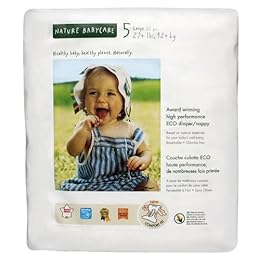
My husband came home with these Naturecare diapers about a month ago. (Have you noticed he's doing my shopping? Isn't that so nice? Please don't turn green of envy.)

I was surprised when he brought them home. I asked him if he knew how much faster these biodegraded than Huggies, and wondered how much they cost. I think they were about 4 times as much. The link above is even cheaper, at 46 cents per diaper, whereas Huggies are about 22 cents per diaper.

My husband said he heard me talking about how we should go green on diapers. I said I wasn't serious, just thinking about it. I think it was a leap, though, into the darkness. We can go green! It is possible. This was a big step in letting go of old ways.

I do still want to know how quickly they biodegrade. They say "compostable," whatever that means. There's also hybrid diapers that are cloth with disposable inserts that biodegrade, and I think that's more what I was shooting for. Cloth would be great, too, even though they have downsides: stinky, require energy for washing, and water.

Milk and the Corporation

I was feeling a little radical proposing raw milk consumption, but yesterday my husband happened to have a lunch conversation about raw milk with a friend of ours. Apparently, someone in the Econ dept. is studying the topic and states that corporations have lobbied congress and now made it illegal to sell raw milk in some states, even though the health benefits are superior. Nutritionists state that supermarket milk just isn't what we need. It just makes it more convenient to get from producer to consumer, but makes it much more dangerous and not as healthy.

Thursday, July 1, 2010

Ginger

Here's what ginger can do for you.

Garlic also has great benefits, being a natural antibiotic. I wonder if ginger and garlic are medicinally best fresh? Probably so. Garlic presses are great for making it more convenient.

Tuesday, June 29, 2010

Campaign to change nutrition labels


I'm glad that the nutrition label has had some changes. When I was little, it was hardly readable. Its nice they made the print larger, and that trans fats are added to the picture. However, I would change a few very important things.

First off, I now believe the most important thing on the label is not the nutrition facts chart at all but the ingredients listing! I think the main thing to ask before eating is: is this real food?

Second, calories is right at the top of the chart, but focusing too much on calories loses sight of the fact that the chemicals put into diet sodas and low-fat foods often makes us more prone to weight gain than the actual fat and sugar it replaces.

Then on the actual chart, I think the Total Fat section should be expanded to include:
Omega 6 fatty acids
Omega 3 fatty acids and its component DHA (these are essential for brain function, and we have no clue how much we're getting- do they want to raise U.S. test scores, or what?) The ratio of omega 3s to omega 6s in our diet is very important. At the turn of the century, they were eating more correctly, at about a 1:2 ratio. That ratio today is about 1:46. Omega 3s can be found in coldwater fish, primarily, fish capsules (keep refrigerated), walnuts, flax, also in grass-fed red meats and cage-free vegetarian-fed hen eggs. If it were labeled, we'd all see where it is! It'd be nice if all meats were labeled, period, with nutrition facts, but expanded to include omega-3 measurements.
Trans fats should be in milligrams instead of grams so there's no more deceptive labeling and
conjugated linoleic acid could be on there, too.

And, very importantly, the amount of post-production free glutamic acid present (see MSG) should be labeled, in grams, to the third decimal place. See more on this issue at Natural Health Care Products. There are lots of health risks from MSG consumption, and we have no idea how much we're eating.

Maybe post-production lead and arsenic should be labeled, too. Of course, that probably varies in production from month to month.

GMO
definitely should be on the label, as well as irradiation. I think that's a consumer's right, yet the producers have vehemently decided for us that its not necessary, to prevent consumers being scared off from their product. Seriously! Its all about the money! Besides, how many people read labels anyway? Chill! People will still eat it anyway, label or no label, sadly.

What really should be jumping out at us to buy at the grocery store (fruits and vegetables!) don't even generally have a nutrition label. I wonder if we'd be amazed at the nutrition found in them (or lack thereof by growing and shipping practices), and want to buy them all up. The way our labels are set up, it destroys all the benefits of fruits and veggies; for example, I have a plastic baggie sitting on the counter stating calories, serving size, carbohydrates, fat, protein, and sodium, of common fruits and vegetables. Looking at it, it just doesn't make sense. No wonder there's so much confusion about nutrition. If we're comparing only those four components it almost makes celery equal to a salty soup. Should I avoid avocados, pears, and bananas because they're highest in calories, and start eating lots of cabbage, iceburg lettuce, cucumbers, and cauliflower? Ridiculous. I realize our food labels make no sense.

Currently on the label are macronutrients which include protein, fats, carbohydrates, (and water), and then micronutrients, which are vitamins, minerals, (and good bacteria). Sometimes I look at labels, and wonder how I'm even getting any vitamins and minerals (except in the case of fortified foods). Isn't it crazy how the nutrients are almost always 0% or 2%? If you're real lucky it may have 4% or 6% daily value. (My applesauce had 100% vitamin C, which I was surprised of. Then, I switched brands and realized it was all just the ascorbic acid added; my applesauce now has just 4% DV vitamin C and 8% iron.) I also wonder if there is ever a >1% DV in a food, is it always on the label? (You know... how its common to skip most and just put Vitamins C, A, Iron, and calcium?)

Beyond this, though, (note: its just a fantasy) but there's even more to put on the nutrition label. Heard of phytonutrients? Bioflavinoids? Antioxidants? Enzymes? Coenzymes? Cofactors? Amino acids? There are even some healthy properties of our food that science doesn't even know what they are yet, just knows they're there.

WIC

WIC is a national food program designed to benefit infants, children, and pregnant or nursing women by giving them checks for specific food items at registered stores. Its not meant to provide all the food that low-income children or expecting women need, but to supplement meager incomes with healthy foods in hopes of improving overall nutrition.

I first noticed WIC food choices were rather interesting about 3 years ago. The items that first struck me as odd were peanut butter and tuna fish. The foods available to buy on the check are pretty limited, and why peanut butter was selected was odd to me. Most children are advised not to eat peanut products until age two because of the risk of allergies.

Tuna fish is on pregnant women's checks, yet, the amount is right at the limit of a pregnant woman's recommended intake of tuna, assuming she's rationing a can per week and not eating more than one. I was told that peanut butter is a great source of protein. Tuna as well, and its high in omega 3s which are essential especially for developing infants. But, why does WIC warn about high mercury consumption, and then have it as a WIC item?

The other available foods through WIC are (See Federal online listing or Washington State specific brochure):
  • Select cold cereals
  • Milk
  • eggs
  • fruit juice
  • dried beans
  • dried beans or peanut butter
  • canned meats
  • cheese
  • fruit and vegetable choices
  • whole grain choices
  • soy beverages
  • infant formula, cereal, and baby food
I won't even go into the quantities of foods that are on the checks, its just weird sometimes, like 1 quart of milk or two separate one pounds of cheese, but lets talk more about the health of these products. Here's Washington WIC:

Select cereals Kix, Special K, Cheerios, Wheat Rice or Corn Chex, Grape-Nuts, Grape-Nut Flakes, Cream of Wheat, Life; I thought it was all great, increasing whole grain consumption. I've lately learned a little about cold cereals, and that due to the level of heat of production, whole grain cereals like Wheaties and Cheerios result in higher insulin spikes than even straight sugar. The high heat also destroys many nutrients, and "creates toxic elements that have caused rapid death in test animals," yet the FDA approves the use of words like cancer and heart-health promoting on the box. (Barbee, 117)
Milk Well, I've learned raw milk from grass-fed cows beats all, including increasing omega 3s, but raw milk isn't allowed. Nor is goats milk, which is fit for those that can't digest cow's milk. Homogenizing milk (all supermarket brands) makes xanthine oxidase (which damages arterial walls) more absorbed in humans. (Read Politically Incorrect Nutrition.) The growth hormone rBST which has been linked to cancer and weakened immune, and is also important to avoid. In Washington state, rBST-free are readily available and labeled.
In the second year of life, children are given whole milk, which fats help in "brain development." At 2 years of age, they are then switched to anything but whole milk. Are we supposed to believe that the brain instantly doesn't need those fats for development anymore, and "dieting" should be higher priority? Low fat, reduced fat, and skim often have milk solids added which increases free glutamic acid.
eggs Organic eggs aren't allowed, which are higher in omega 3s, but I wonder if advertised vegetarian-fed "cage-free" eggs are, which also have higher levels of omega 3 fatty acids and DHA, essential for brain function. If they're not, I'm sure WIC would change if they realized more omega 3s would be available.
fruit juice This is one of the worst. Sure, it gives vitamins, and it comes from fruit, right? Well, its best fresh made at home. Pasteurization of packaged juice destroys a lot of the enzymes and other nutrients. Just sitting on the shelf, it loses nutrients. Its basically just a sugar drink. It also comes in a plastic bottle- BPA threat? or, tin can- aluminum threat?
WIC offers so much juice. Juice is one of the major sources of sugar in children's diets, right next to soda, according to Behavior and Nutrition. Dentists advise not giving these juices in sippy cups for all-day sipping, which leads to tooth decay, as well as hyperactivity, insulin resistance, and further down the road, type II diabetes. Boxed juice also contains lead, but big deal; so does much of our food.
dried beans Sounds good. They give out a cookbook of bean recipes to expand our world of beans. Cheap, great food storage food :), and they say "baby's love beans."
dried beans or peanut butter Who's really going to choose $1 worth of free beans over $3 worth of free peanut butter, even if it is allergenic? Avoid trans fats by buying 100% natural (Adam's) peanut butter.
canned meats Tuna: contains mercury, but excellent for omega 3s.
cheese Great. Gotta love this one. Just trying to switch over to raw milk cheese, rBST free, from grass-fed cows, and annatto coloring isn't great for us, nor are enzymes.
fruit and vegetable choices They just barely started this. Much needed.
whole grain choices choose corn tortillas, bulgur, oatmeal, brown rice, or 100% whole grain bread (all if its the right weight). Many dough conditioners, additives, and preservatives, aren't good for us. Bread is best homemade.
soy beverages, tofu Soy is not a complete protein; also, unfermented soy products can lead to hyperthyroidism
infant formula, cereal, and baby food Infant formula and baby foods often have hidden MSG and/or BPA. Most people I know have an excess of baby foods and cereals from WIC that they never used.

So, overall, is WIC helping or hurting? I'm not anti-government-choosing-for-us what we eat, so its not Twinkies and Ho-hos, especially when we've got an obesity epidemic and we're undergoing universal healthcare. I think WIC is pretty helpful in many ways (whole grains, fruits and veggies). A real problem is just our food system in general, so how can you blame WIC when its got poor food to choose from?

But, money is voting power, and whoever decides what WIC can and cannot buy has a lot of power to choose a lot of votes in our food supply, for good or ill. What really kills me is the bottled fruit juice and the no-raw no-goats now no-organic milk, and, well, you can see what else I wrote above about the other items.

Alkaline foods

I was first introduced to the idea of eating alkaline foods reading Politically Correct Nutrition, but didn't quite understand the significance. Kevin Tudreau states it is a natural remedy; the more alkaline we are the better able we will be to fight off disease. The more acid our bodies are, the more susceptible to illness we becomes.

Here's a list of alkaline foods from energize.com. However, here's another list from rense.com which contradicts it, at least for lentils, so(?).

Clean Up Your Diet
by Max Tomlinson lists "asparagus, onions, parsley, broccoli, garlic, okra, squash, green beans, celery, lettuces, sweet potatoes, zucchini, lemons, limes, grapefruits, mangoes, papayas, figs, kiwis, apples, pears, and all kinds of melon" as alkalizing foods.

Apple Cider Vinegar

Apple Cider Vinegar is good for many things. This post goes out to my husband who is a huge advocate.

Apple Cider Vinegar should be unadulterated and selected to contain "The Mother" to get the best benefit. Kevin Tudreau in his book Natural Cures makes clear that the FDA strictly enforces its law that "only a drug can treat, prevent, or cure a disease," in order to destroy natural, unpatentable cures' ability to interfere with the sale of highly profitable patented drugs. This point comes home when I look at the back of our apple cider vinegar bottle, which states lots of benefits, but "The comments here are not evaluated by the FDA. This product is not intended to diagnose, treat, cure, or prevent any disease." The reason they have to put that on the back of the bottle is that if they did claim it could do any of the above, they would be selling "drugs" without a license, and could potentially be put in jail or receive other retaliation by the FDA.

Here's what it says: Hippocrates, called the Father of Medicine, first prescribed it as a remedy in 400 B.C. (Ironic that the Father of Medicine prescribed it but it cannot even be claimed to help disease today.) They offer a book on the remedies and recipes of vinegar by sending $12 to Appleseed Orchards PO Box 1340 Sebastopol, CA 95473. Works as a disinfectant for things such as phones and computers so dangerous chemicals aren't on our hands and fingers, whiffing it helps with sniffles and stuffed noses, it repels insects, removes rust, whitens dingy socks, loosens hardened paint brushes, stops poison oak itch, and cleans shower mildew.

My husband's favorite use of it is to drink it diluted when he feels a cold or flu coming on. It changes the body's PH to prevent disease. My favorite use is taking a bath in it; its the best thing for a yeast infection even above over the counter meds and eating plain yogurts. Drinking lots of water is also helpful.

Sunday, June 27, 2010

Parenting

"Dr. Mech suggests that parents stop being 'wimps' with their children's demands for junk food. He has treated children with seizures, depression, eating disorders, etc., whose symptoms completely disappeared when parents got tough about what they ate. He blames "unparented kids" and excitotoxins for delinquent, frustrated kids with "attitude". The lack of being models for "impulse control" by parents and culture, sets kids up for ADD and failure. Parents let other people and the media teach behavior which can sometimes reinforce disrespect for elders and the acceptance of violence. Add excitotoxins and you have explosive kids. How can we be examples of delayed gratification if we have lost touch with it?

He called MSG the first "gateway drug". This kind of drug leads to other drugs due to its ability to diminish impulse control at a very early age. Schools have caved in on fast foods for our children. Few serve untainted lunches anymore. He has little patience for parents and educators who say, "But it's the only thing they will eat" in reference to processed j junk foods. He disdains what he labels "Toxic Food Manufacturers (TFM's) who say, "Snack foods are important to the American diet." He criticizes doctors who are so quick to use drugs to treat children and adults for conditions (often behavioral) caused by excitotoxins. He claims that funding by drug companies compels doctors to prescribe more and more medicines. He also said 'Don't believe doctors who tell you that you or your child will probably always be on drugs.'" (Anglesey, 63)

Sacred Planet

Entertainment quality: 4 stars
Educational quality: 4 stars
Quality footage: 5 stars

This movie is a must see (Nat, James, Mom, Dad). It is healing for the soul. It would count as your yoga for the day. I like the way this is presented, and I think it speaks volumes, better than The Corporation, Speaking Freely, Homo Toxicus, Daily Bread, etc., to get the point across: where to find real wealth.

WSU Art

We went to see the artwork of Matthew Leiker "World of Mateo" at WSU's Museum of Art yesterday. It was fun. His website World of Mateo.com unfortunately doesn't display his donut shop or carwash. But contrast his artwork, which makes consumerism look fun, clean, and carefree, with the WSU art exhibit displayed at the Seattle Pacific Science Center in January 2010, and you get a quite different perspective. Chris Jordan's work is called "Running the Numbers."

How to Survive an Earthquake

See "How to Survive an Earthquake" by Doug Copp, Rescue Chief and Disaster Manager of the
American Rescue Team International (ARTI), and United Nations expert in Disaster Mitigation for two years. Lie in the Fetal position next to a large object but not under it, as it will get crushed, but the ceiling will be supported by the large crushed object and create a space. For example, lay in the fetal position next to your car, bed, or in the aisles at school between the desks. Avoid stairs and doorways, and its best to be near the perimeter of the building so you can escape once the earthquake is over.

Saturday, June 26, 2010

The Corporation

The Corporation. Available at Washington State University library (search for "the corporation dvd achbar") and through Netflix.

Aluminum

Kudos to my husband for picking out Rumford baking powder. He said he was so glad when it said right on the front "aluminum free." It made it so easy. Aluminum is a brain toxin, I don't know why it would be added as an ingredient to our food. Its bad enough that in the processing of food it may collect lots of aluminum.

I first noticed aluminum in our food when I read the back of my salt box. I had just assumed salt would be safe for food storage, but it actually contained sodium silicoaluminate as the second ingredient, along with dextrose, and sodium bicarbonate (which obviously may also contain aluminum), all of which I'd rather not be eating.

We opted for Morton table salt, which has just salt and "Calcium Silicate" (an anti-caking agent). Unfortunately, its not iodized, and I have no idea what calcium silicate is.

In soy infant formulas, "Liquid soy products, often produced in aluminum tanks, contain 50 to 100 times more aluminum than breast milk (in addition to high levels of cadmium). The high manganese content of soy formula has already been implicated in harming the infant brain."

"There are several studies linking aluminum with fluoride, showing that aluminum is absorbed more completely in the presence of fluoride. The aluminum in the brains of test animals doubles when accompanied by fluoride, resulting in brain tangles (amyloid deposits). Fluoride is neurotoxic by itself, but becomes many times more toxic when combined with aluminum." This makes drinking soda particularly dangerous, as soda contains fluoridated water.

I bought my husband an aluminum water bottle (the trend to avoid BPA) after he bought me a stainless steel one at ShopKo. I think I'll have to upgrade his.

Disposable aluminum pans, commonly used for freezer meals or potlucks, may corrode in contact with acidic foods such as tomato sauces. So, use sparingly or for short durations with acidic foods.

Developing Brains II


Fetuses exposed to high levels of MSG won't appear to have birth defects. The affects will come much later on in development, perhaps decades later.


See developing brains first post

John Perkins Speaking Freely

This movie put a lot of the pieces of the puzzle together for me. Whereas the world was kind of confusing to me, its now in perspective. Foreign aid, third world poverty, and immigration laws.

Toothpaste and Shampoo

Brand names from Debby's book for MSG free products:

Detergent All Free and Clear and Biokleen Free and Clear detergent
Shampoo Shampoo for color treated hair is milder, but avoid hydrolyzed proteins (wheat, silk, milk, soy) if listed
Soap Clearly Natural unscented glycerine soap for skin and hair
Dr. Bronner's soaps and liquid castile for shampoo (the soap can be used to brush teeth)
Dove soap for sensitive skin- no perfume or dyes
Toothpaste Baking soda, Homeodent
Deoderant Sure Original, plain baking soda

Friday, June 25, 2010

Polyunsaturated fats

"Unrefined polyunsaturated oils in small amounts can help provide us with some of the essential omega-6 fatty acids our bodies require. A better source for these essential fats would be vegetables, fruits, nuts, seeds, and grains. The public, however, is consuming way too many polyunsaturated oils like corn, safflower, sunflower, cottonseed, and soy. Too many of these fats can upset the balance they must keep with the omega-3 fatty acids, contributing to a number of problems including immune system dysfunction; damage to the liver, reproductive organs, and lungs; digestive disorders; depressed learning ability; impaired growth, and weight gain.

"Polyunsaturated oils are easily oxidized, making them a source of free radicals, which injure the arteries and create a situation that cholesterol tries to remedy. Not only does cholesterol attempt to repair the lesions created by free radical damage, it may be helping to prevent such damage in the first place by acting as a potent antioxidant."

"High intake of polyunsaturated oils weakens cellular membranes. When this occurs, cholessterol comes to the rescue. Additional cholesterol enters teh cell membrane in order to stabilize and restore proper cellular function. In the process, cholesterol is drawn from the bloodstream, thereby lowering serum levels temporarily." This is sometimes misinterpreted that polyunsaturated fats are heart healthy. "In fact, it appears that cholesterol is simply trying to repair the damage done by high levels of polyunsaturated oils. These fats were not common many decades ago when heart disease and certain other chronic diseases were rare." (taken from Politically Incorrect Nutrition by Michael Barbee, C.D.C., p 22)